Saturday, 25 October 2014

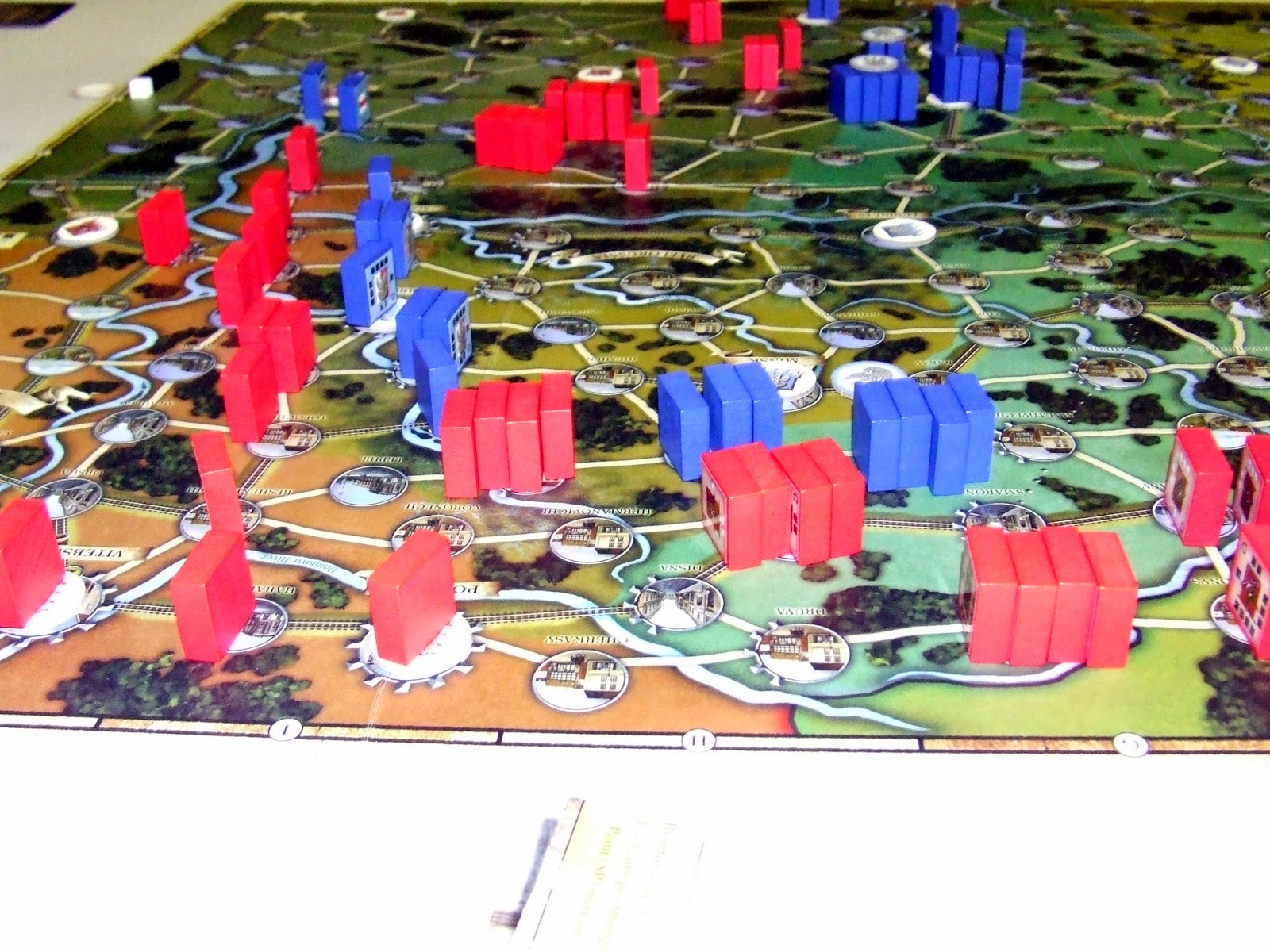
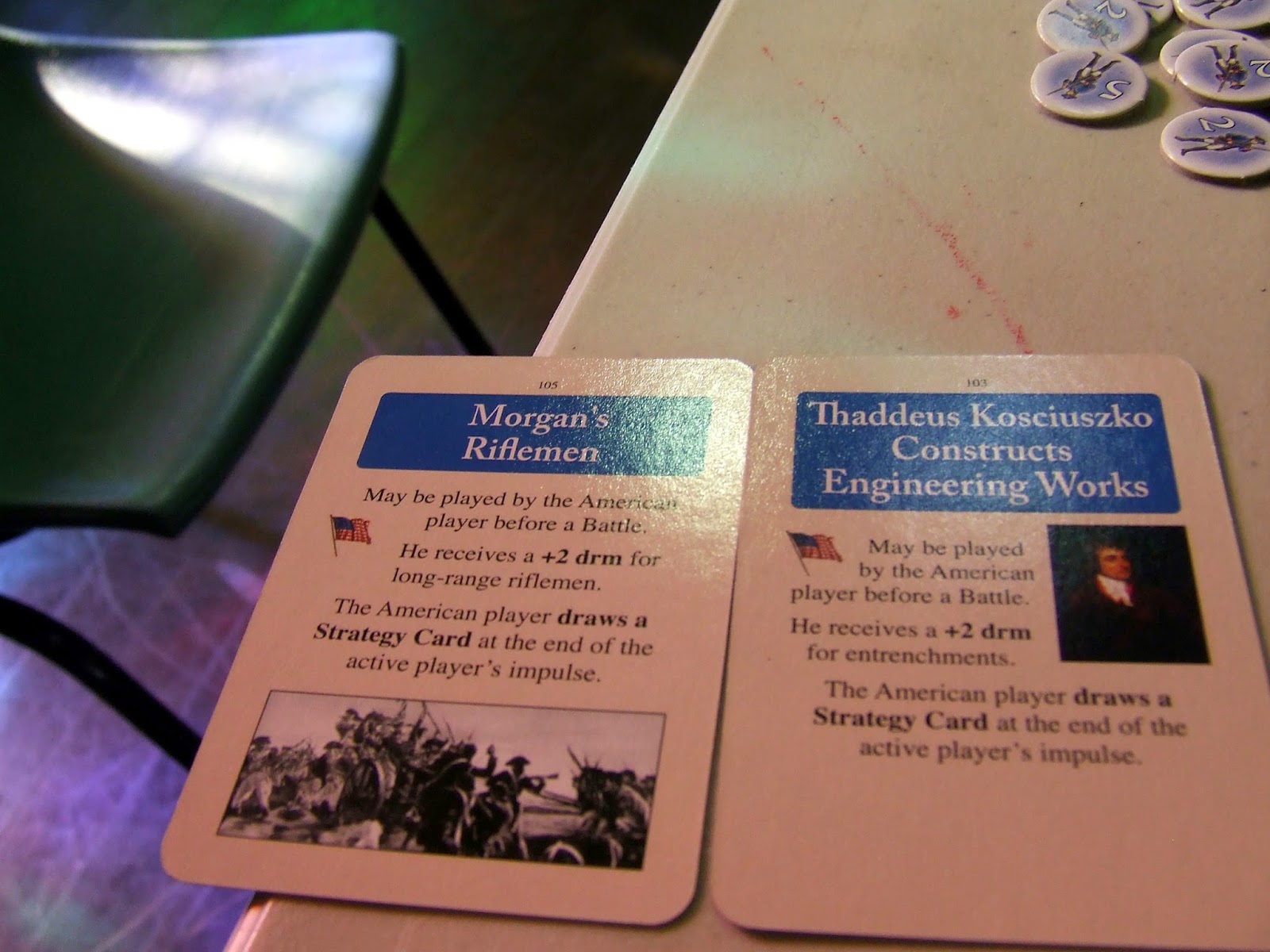
October 2014 - Strike of the Eagle


Strike of the Eagle


by Academy Games 2011


Excerpt from 'Miracle of the Vistula"

Major B Hof, Sydney University Press.2007"

‘Over our Corpses’ June to August 1920.


The Defense of the Polish advances in Belorussia and the Ukraine now began. The Soviets hoped to defeat the over extended positions the Poles now had by co coordinated attacks both north and south. The Poles looked at it as it was better to fight in someone else’s back yard than your own.
Lithuania decided now was the time to strike to get back territory seizes by the Poles. They struck at Nemehoyne in the north inflicting a stinging defeat on Sikorski's forces. In the South Polish light armour aided in the defeat of a Soviet attack at Offetz. Stalin in a report to the Central Committee said "Using infantry against armour is like using flies against elephants”. On the Northern Front Tukhachevesky's forces took Vilna, after a bitter fight. On the Southern Front General Budenny marshalled his forces, while "Comrade Stalin smoked his pipe and contemplated the wall map for half an hour at the time, before issuing brief precise orders”.
Bad weather with unseasonal rain paralysed the Southern front. General Heller the Polish commander on the Southern Front now made a daring raid with his armoured cars breaking through the scattered Soviet detachments to the Gates of Kiev! Kiev held but a complete reorientation of the Soviet effort was necessary. In the North a concentrated attack on Vilnius was repulsed with heavy Polish losses. This attack was not expected and Soviet forces in the North went on the defensive. Polish sabotage at Potolsk marshalling yards also slowed Soviet efforts. Another Polish attack was successful at Vilnius. At Kiev a Polish armoured Train aided the attack, and the Polish flag was raised over the Fortress. Soviet forces panicked and fled the city and the flag of the independent Ukraine was raised. At Borkov in the North another Soviet attack was beaten back. The Lithuanians now held all the territory they wanted made a truce with the Poles.


Kiev was now besieged from the soviet forces, but held out. Soviet deception operations successfully masked an attack on Vilnius when Polish re enforcements were sent elsewhere. Before Soviet forces could follow up this promising development, forces had to be diverted to the Archangel Front, where a major British offensive was unleashed. Tuchachchevesky railed against "Those fools on the Central Committee! If it was not for soldiers like me, there would be no Revolution!” He would live to regret those words.
The Poles took the advantage in the North to retire. Meanwhile in Kiev Soviet artillery was instrumental in defeating the Polish armour. Kiev fell with heavy casualties on both sides. Stalin reported to the Central committee that "I would rather loose an army than a city.” In reply to enquiry from Trotsky he replied crisply “that transport and rations for enemy prisoners were not needed.” The Soviets had in fact lost a division, but more importantly time. A raid on Headquarters in the Soviet Northern front stopped all movement, but an attack at Vilna was once again repulsed.
On the Southern front the Seventh Escadrille of Spad fighters flown by Americans helped defeat the Soviets on the Southern Front at Derazvinia. By the 15th of August Soviet attacks in the North were finally being coordinated successfully, and Borisov fell after a bitter fought battle. Sikorski bluffed with the diminished forces he had holding the Soviets back.

In the south, Soviet armour was successful at Humien. But at Potolsk the Soviets were fooled: the Polish Commander got some of his men to dress in French colonial uniforms, of the soldiers from Senegal. Seeing these Troops the Soviets feared they were the dreaded French "Turkos", the colonial troops from Senegal who were reputed cannibals! A Polish sortie by these troops was decisive. By the 25th the Soviets called Sikorski’s bluff, and took Grodno. Sikorski died leading a bayonet charge. Soviet casualties were heavy, but at last it seemed the road to Warsaw was open, at least from the north. Or so it seemed."


Thursday, 16 October 2014

November 2013-The Hobbit & Sheridan's Ride


November 2013


The Hobbit


This was the second of the games played on the day, but by far the most vocal game.
However, I only took two pictures as I was at that time very heavily involved in my own tabletop game and keeping the grandson entertained (he had a great day).


---------------------------------------------------------------------------------


Sheridan's Ride


Mayfair Games
1981


This was the first game of the day and highly competitive and well played.
I will see if I can get the players to pen a few words.

Here are a few words:


A letter.
"To Mrs Therese Early;
My dear I write these few lines as a prisoner of General Sheridan. I have been slightly injured in the right arm, but I am being well cared for. 
By now you would have heard of our tragic loss at Cedar's Creek. After our last two defeats I thought that the Yankees would be careless. Our scouts bought information that the enemy camp at Cedar Creek was badly scattered with some brigades and divisions not in support of each other. Carefully we managed to get our force of three infantry divisions very close, with Wharton's Horse on the flank at Cedar Ford.
I must say we were successful at first. 
The Yankees were disorganized at first and were routed at my charge through their camp, screaming the Rebel yell. Prisoners were taken, and the enemy retreated, but they were soon forming up a defensive line.
Some Union artillery proved most stubborn, taking Kershaws' division out of our line for almost two hours before finally overcoming them. This cost us dear as we were outnumbered. Wharton had stormed the Ford but a large part of his force were cut off and taken prisoner. Showing great initiative the remainder under Col. Steve Thomas circled round through swampland and by the evening actually threatened the town of Middleton, our objective. This forced the Yankees to dispatch a large force to ward him off; after some lively skirmishes Col Thomas' force escaped the Yankee clutches, I am glad to say. We had been fighting since five and it was now one o’clock and our forces were now exhausted.
The Yankees were finally rallying and the fire was getting hotter. I must say our guns were well served, always supporting our attacks. Now alas! They are in enemy hands!
At about two o’clock in the afternoon we heard massive cheers from the enemy and we realized our old foe General Sheridan was arriving on the field. It was as if Marse Lee had appeared at my side, the effect Sheridan had on the Yankee army. I tried to hold the field at least till nightfall, but alas the odds were against us. As the faint hearts fled, heroes stayed and died with their faces to the foes. General Ramseur was killed commanding his troops, and general Kershaw was captured badly wounded in the left leg; pray he survives amputation! I was trying to rally Gordon’s' division, when my horse was killed and I fell. When I got up I was at the end of Yankee trooper’s pistol. With my wrist broken I could not draw my own, so now I am a guest of General Sheridan.
The general is what is called a “black Irishman” small with sallow skin, dark hair and dark eyes. He has supposed to have a short temper but has been the perfect gentleman to me and is allowing this letter to be sent to you by flag of truce to ease your concerns.
We have suffered great losses, 12,000 killed /wounded and captured, as well as all our guns. General Sheridan tells me he has lost 5,000 himself and right to the end he wondered would he drive us off by nightfall. Apparently most of Gordon’s' division and half of Wharton’s' escaped. Alas for our beloved Cause! Alas for my poor brave Army of the Valley! I fear my dear this cruel war will be over soon, and not to Virginias' advantage! I will be sent to Washington in a few days and as long as I give my parole, captivity should not be to onerous. Keep me in your prayers, as you will be in mine. Your loving husband, Jubal Early, late General commanding the Army of the Valley.


Saturday, 4 October 2014

September 2014-Washington's War

September

Washington's War 
2010
By
GMT Games
(Updated Oct 14)


Book review; Times Literary Supplement 2/10/14.
"Benedict Arnold and the First American Rebellion"
Greg Heard. 375 pages.
Maps. plates. Index.
A book from Prof Heard is always to be welcome .This Australian historian has carved himself an enviable niche as a writer of well written popular military history. Prof Heard writes for the non specialist.

Arnold of course is well served by biographers.  There is "Arnold; American Hero" by S Potter {2007 CUP} and the magisterial "Benedict Arnold' the classic two volume work by Stomas {1987 OUP}.  But there is a gap in the market for a good one volume biography:  Mr Potter’s book perhaps shows a historian blinded by his admiration for his subject.
Prof Heard is also better at placing his subject in his world.  To some extent this is something of a "Life and times" book, but the title should tell you that.  This is mainly about Arnold and his actions and influence in the First American Rebellion.
He was called even by his British foes 'The American Hector”.  Arnold never lost a battle but his last, and there he died of his wounds, and perhaps despair for the cause he gave all he had for.
Prof Heard takes us through Arnold’s difficult childhood with a spendthrift drunken father who squandered the family fortune, and Arnold’s efforts to rebuild it.  Wealth came his way, first by his pharmacy and bookshop, then by investments in the West Indies trade.  These enterprises bought Arnold like many another American trader into conflict with the Navigation Acts  He was accused of smuggling but a sympathetic local jury acquitted him.
A veteran of the Sevens Years War, Arnold was instrumental in raising and equipping Connecticut Militia, paying out of his own pocket.  Arnold insisted on his troops being well disciplined and the firmness of the Connecticut Line regiments in battle was noticed by friend and foe.  Arnold tried to spread this discipline in the rest of the rebel forces, but without success.  Indeed only when it was to late did American forces have anything like the discipline of their foes, and is considered a major reason for the Rebellions defeat.  It was of course rectified in the Second American Rebellion 1812-1815 which lead to American victory and the independence of the fifteen colonies.
Arnolds' conduct in the Storming of Boston in May 1775 brought Arnold to Washington’s notice, and he was promoted to Brigadier.  Arnold was instrumental in defeating of British forces the Virginia Campaign in 1776, and the success of North Carolina campaign as well.
In the Winter he made proposals to Congress about raising a Navy; though well thought out they could not be carried out due to a lack of money.  Arnold raised a force of sloops, brigs and schooners to harass British shipping locally and these ships helped in his greatest triumph.
At Norfolk in 1778 a major British force under Burgoyne was defeated and forced to evacuate, leaving much booty behind.  The Royal Navy could not be everywhere and was too busy fighting Arnolds' little fleet to provide the usual support for the British incursion.
The Royal Navy was a major reason for British victory; the Battle of Norfolk is a sign of what could happen if the Americans ever gained a proper Fleet.  But by now defeat was looking more obvious for the Rebel forces.  New York had fallen, and Greens 'ill managed attempt to retake it was a blow to the rebel’s hopes of retaking New England.  Arnold had been suggested for that command and even submitted a plan, using the artillery that Green neglected.  It could well have worked.
With Washington and Green both defeated, British Armies under Cornwallis and a vengeful Burgoyne invaded from Georgia and Virginia.  Arnold defeated Cornwallis and retook the Virginia state capital Richmond but most of his army melted way in the winter of Despair 1779/80.
Arnold raised new forces and went south to the aid of North Carolina.  On his way there he was defeated at Petersburg in March 1780, and his army defeated after the “Sternest fight I ever did serve upon” as a British Veteran who had campaigned since the 45 wrote.  Arnold was mortally wounded leading a last Charge.  Burgoyne refused to take his sword but his surgeon could do nothing but ease Arnolds passing.
When told the news of North Carolinas agreement to the British terms Arnold said “it is better I die now than live to see defeat.”
Burgoyne had him buried with full military honours, and attended the funeral. Burgoyne was confronted in a London club by an indignant aristocrat about such respect for a Rebel and his reply was cutting “This Rebel gave his fortune, his health and his life for his cause.  Tell me sir, what have you ever given for anything?”
Arnolds' views on help from Spain and France are also covered and Prof. Heard points out how his experience in the Seven Years War perhaps led to his bias against seeking help from his old foes.  Again French help was pursued and successfully sought in the Second American Rebellion, and it was a major cause of success.
Arnold’s death in battle spared him the fate of Washington, Jefferson and the other members of the 'Noble Fifteen' whose trial in London and executions were a major political error in reconciling a rebellious America.

There is a brief chapter about Arnold and his place in the culture of the modern United Provinces of America, which could have been longer.  This apart, I can recommend this book to anyone wanting a good biography on Benedict Arnold and I wait for Prof. Heard’s next book with interest.


Friday, 15 August 2014

August 2014-Conquest of the Empire


August

Conquest of the Empire 
2005
By
Eagle Games


July 2014-Raid on Richmond


July

Raid on Richmond


To the Subscribers of "The Richmond Examiner '

You may of heard rumors of the treacherous Raid of Federal Cavalry on The Confederate Capital!

Rest assured you will be given the full details of this Yankee Barbarism once our special maps return from the lithographers!

Who were the mysterious guides of the Union raiders?

Why did the militia take so long to assemble?

Did President Davis escape in women's clothing?

Why were reinforcements from the South of the city take so long to arrive?

What part did artillery play in the fight?

Why was General Winder captured?

Why did our soldiers on the east of the City fail to intervene?

How much valuable property in the form of slaves escaped?

The Answer to these and other questions will be answered in a special edition of" The Richmond Examiner"of the Raid On Richmond!

The Examiner March Third 1864 AD.

"We report. You Decide”. RAID ON RICHMOND! Slaves Stolen! POW's Freed! Vital Industry Destroyed! Confederate Confusion! Yankee Barbarism! Blood and Cannon Fire on Our Streets! More evidence of the Davis' Governments' incompetence!

Ass. Editor L. Mack Esq reporting, deputising for Editor Mr J Daniel, Esq who is ill."


A glooming peace this morning brings, The Sun for sorrow will not show his head.’

Well might the Bards words be applied to the unhappy city of Richmond!

In this special edition we give all our readers the facts as we know them. It must be admitted that these early reports may have to be revised, but we believe all the facts should be given to our readers. We pray their indulgence for any mistakes made in haste.

At 8 of the Clock Sunday Morning yesterday a reinforced Brigade of Federal Cavalry under Brig. J. Kilpatrick attacked Richmond, with a large force coming down the Brock Road from the North while a smaller force from the south under Col. Dahlgren liberated Yankee POW's from Belle Isle Prison.

Typically, our lack lustre government had made little preparation for such a crisis. The Federals numbered about 3500, with horse artillery, with troopers from Maine to Michigan, from the slums of New York to the Frontier of Wisconsin.

The Cabinet were actually meeting at the White House when the news broke, and they scrambled and dispersed for safety. There has been a rumour that Mr Davis escaped as he dressed in his wife’s' clothes! We confess we at the Examiner are not great partisans for Mr Davis, but we are partisans for truth!

The Truth is that Mrs Davis handed her husband her own bright coloured shawl to protect him from the rain as he left the White House as in the natural haste he could not find his. The White House slaves almost totally deserted their duties and fled, some to the Yankees! "Ah You Blocks, you stones, you worse than senseless things!”

It is estimated that 450 slaves deserted comfortable homes, indulgent Masters and light work for the perils of Freedom! Several slaves have taken valuables and cash, one body servant taking his masters best suits! Was there ever baser ingratitude under heaven!

The Federals were met by several men and women of both races to guide them to their targets. If we had a proper government such traitors would have been detected by now!

The Captives at Belle Isle were quickly freed, and they made for the Richmond and Petersburg RW bridge. Our forces from the south tried to intercept these miscreants but were hampered by the lack of soldiers. Federal forces under "Beast" Butler were making what proved to be a feint towards Richmond, and not all forces available could be sent to Richmond. Typical Yankee cunning!

Federal Cavalry flooded our streets, and most citizens kept to their homes. Clerks from the War Department armed themselves and defended their offices as best they could. The Militia were slow to organize many either at Church or just awaking on a wet Sunday morning.

Fierce fighting eventually developed around the Rail road depot at the corner of Marshall and Eight Street. Militia gathered there, and a long fight developed. The Federals, led by the Vandal Chieftain Kilpatrick himself could not break the resistance there and the gallant stand of the militia tied up Yankee forces that could have been used elsewhere.

Forces from the North and West came as quickly as possible, with Federal artillery attacking our cavalry on Jefferson and Canal Streets. After a hard fight our diminished forces had to retreat allowing the Unionists to join their forces and escape with the newly liberated prisoners and slaves!

Nor were the Yankees any respecters of property, private or public! The vital Tredegar Iron works have been totally gutted, with all the arms and steam machinery destroyed! Only via blockade runner from Europe can such machinery be replaced! The Richmond Iron and Steel works have met a similar fate! Why did not a vital installations have a larger guard? Also the Ordnance and Arsenal have been destroyed with many weapons being handed out to the freed POW's.

The Foundry on Cary Street was destroyed, but the Yankees proved too bold here. They were surrounded by Confederate infantry and cut off and out of ammunition they had to surrender. By now, three of the Clock in post meridian, Confederate reinforcements were finally bringing their strength to bear on the raiders.

Around the Capitol Building and at Fourteenth and Broad, artillery was used to blast away at the Federals. The Unionist finally retreated in the rain, taking with them vital documents from our Secret Services offices! This could lead to the arrests and death of many of our brave agents!

After our Militia were finally driven from the Depot and it was burnt by the furious Kilpatrick’s own order, angered by such defiance. Due to the rain and the gallant resistance of our forces the city itself is not much damaged. A Yankee force held the Richmond and Petersburg RW bridge to the end against our forces till they ran out of ammunition. They and other captured raiders are in Belle Isle, but as one of them wittily remarked ”There is plenty of room now!”

Also General Winder was pointed out by a Negro agent of the Federals at his home on Nineteenth Street and abducted at gunpoint. It is feared he will be tried for shortcomings in the Confederate POW department. This from the people who run Point Lookout, Camp Chase and other Bastilles were Confederates suffer from illness and cold and die in want in a Nation that boasts of its' riches! Is there any limit to Yankee hypocrisy?

By five of the Clock, under a heavy rainstorm the last raider escaped. 450 sick prisoners were left behind as well as about three hundred raiders. Another two hundred will be shortly filling dishonourable graves. Confederate casualties are hard to estimate, but at least four to five hundred are dead or seriously wounded. About 2500 prisoners were freed, and no doubt be soon swelling the Federal ranks. A half decent sensible government would not allow these many disasters to happen, but what are we to Fare under Mr Davis?

We will update our readers with any news to hand, and hopefully we will soon have better news to print. ”Cry Havoc! And let slip the dogs of war!” Also any printers, type setters and lithographers seeking good wages and liberal terms please apply to the "Examiner" office. All wages paid in gold or silver coin.