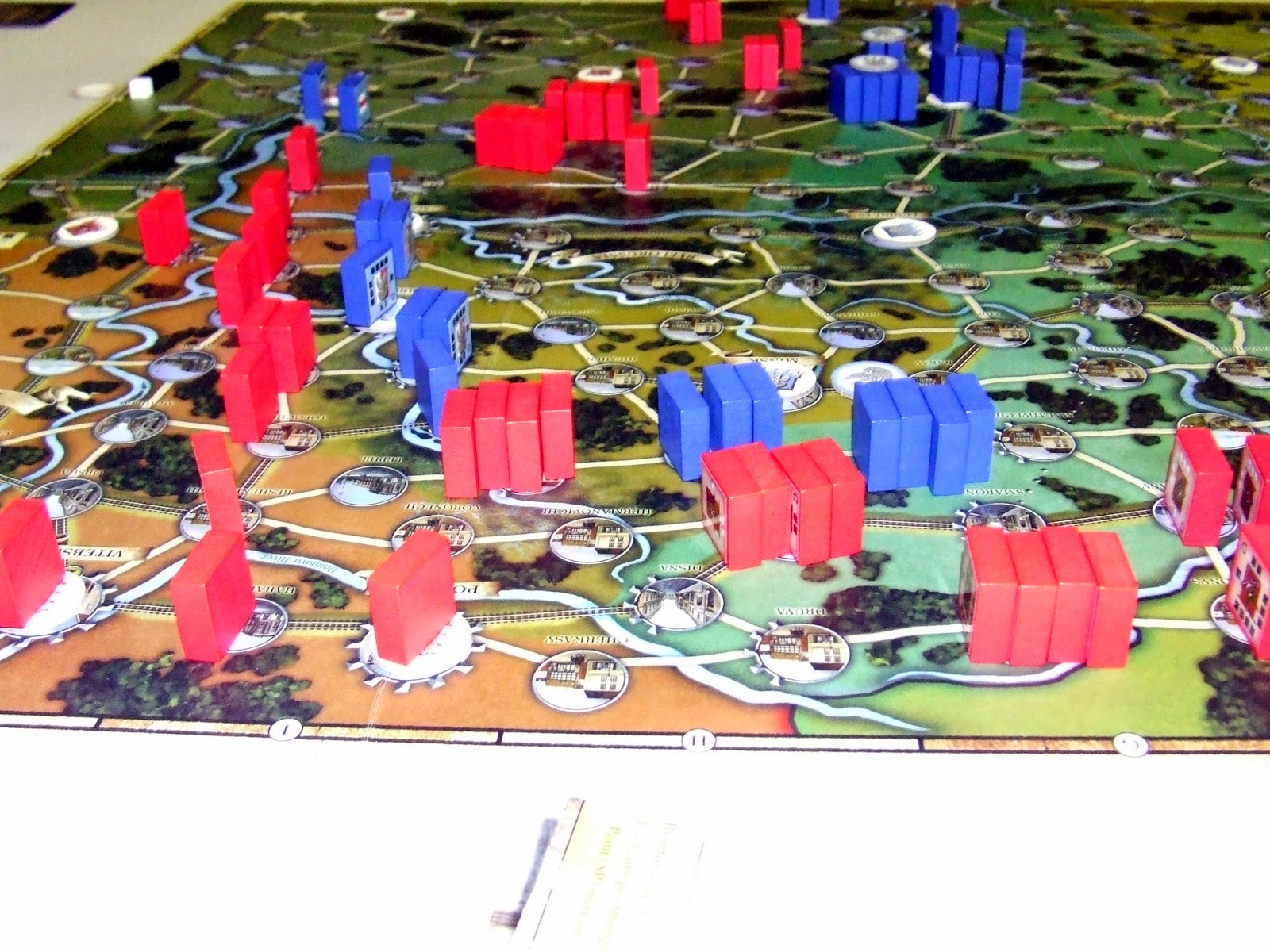
Thursday, 22 January 2015

January 2015-Kampen om Norge


Kampen om Norge

2012

by Vega Forlag


"Antony Eden British Leader in peace and War"

L Mack Oxford University Press 1987.

Chapter V

Norway, Narvik and the Namsos Debate.

The Namsos debate is rightly known as one of the most important debates in Parliamentary history. 
It led to the fall of the Chamberlain Government, the transfer of Churchill from the Admiralty to the Ministry of Aircraft supply, and the rise of Antony Eden as the British Prime Minister. Such a debate needs some background. 

Churchill had been eager to block the import of iron ore from Sweden via Norway down the neutral Norwegian coast. He even proposed seizing the Norwegian port of Narvik in the countries North, and using it as a source of support for Finland, now struggling with the Soviets. Cabinet and the French thought this was too much, but the possibility of mining waters just outside the legal limits of the Norwegian coast was proposed. The most delicate negotiations were ongoing with the Norwegians. Naturally, Norway did not want to be dragged into war, but there was little pro German feeling.
HMS Cossack

Hitler too was shifting his gaze to the North. When HMS Cossack seized the KMS Altmark in Jossing Fjord in Feb.7.1940 and liberated nearly 300 Allied sailors, Hitler was sure that it was a sign of Norwegian compliance with the Allies. Norway vigorously protested this breach of neutrality, but in vain. Hitler decided to attack on Sunday April 9.This was a risky undertaking: an amphibious attack on a hostile shore by a small untried Navy. 
KMS Altmark

British intelligence informed the Norwegian government on 7th, as did an anti Nazi officer in the Kriegsmarine to a contact in the Norwegian Embassy in Berlin. The Norwegian Cabinet decided after lengthy discussion to put the Navy and Air Force on full alert at once, ask for allied help, and mobilize the Militia that made up most of the Army on Monday 10th.This would be done by mail, and the coastal batteries of the major cities were alerted by telegraph. The Royal Guard, the only long term professionals in Norway were put on a war footing. The Royal Navy, with French and Polish aid, searched in vain for the invading German Ships. Aerial and submarine searches were also fruitless. 

The German landings were made without a hitch, except in Oslo. There a warm reception from the Coastal batteries turned the Germans back to land south of Oslo at Kongsberg. At Kongsvinger, north east of Oslo German paratroopers landed to cut Oslo off from the Rest of the Country. In Stavanger Paratroops were supposed to seize the port and airfield, but there the Norwegian Air force found the fifty Transports and escorting fighters first. Twenty two Norwegian planes had been scraped together, fighters or medium bombers of mixed British French and Italian make. In the Parlance of the time the defenders "bounced' the Germans shooting down fifteen and damaging five. The Germans were not expecting any opposition in the air and the wild melee dispersed the paratroopers to the province of Egersund, many miles away from their intended drop zone. Numbers and experience told in the air-many of the Germans had served in the Condor Legion. Twelve of the Norwegians were shot down, with five more damaged. In Bergen the two old Coastal Defense Ships Norge and Eidsvoll met the German invasion force head on. Disregarding the French and British flags the Germans were Flying they fired on the German Destroyers, damaging one of them heavily and another slightly. But
Blucher
with the backing of the modern German ships like the Heavy cruiser Blucher and pocket Battle ship Scharnhorst the battle could only end one way. The Eidsvoll blew up, and the Norge was turned into a flaming wreck, beaching itself to save the surviving crew. Bergen surrendered when the German commander threatened to level the city if the coastal batteries fired. At Egersund the diverted paratroopers made good use of their diversion to secure the telephone lines to Britain, thus cutting off Norway further from aid. 
Scharnhorst

Kristiansand, Bergen and Trondheim all fell to the Germans, in spite of the might of the Royal navy. French British and Polish forces landed at Namsos and Mosjeen in the centre of Norway. King Hakon gave a speech rallying his people to the defense of their Country, saying it was being defended on land and sea and air by Norwegian forces and strong Allies were on their way to help. The Royal Guards attacked the German paratroopers at Kongsvinger and defeated them, forcing some to seek internment in Sweden. Some Militia units armed themselves and attacked the Invaders. At Bergen a force going west was attacked and sent reeling back in defeat, with all other advance halted in the area. The German Paratroopers now supported by mountain troops advanced from Egersund and overcame the garrison at Stavenger. 
German Gebirgsjäger advancing.

A German force advanced to attack Oslo, all attacks were repelled by the gallant defenders. A German paratroop attack at Bjonfjell near Narvik failed, as Militia from Finmark lead by Col. Thorin destroyed them as they landed. Off Stanvinger the battleship HMS Resolution and aircraft Carrier Glorious were sunk without loss to the Germans. Allied forces with support from Norwegian Forces under Major General Sir Robert Greg-Heard took Trondheim after bitter fighting with losses on both sides. 

The Royal Family, the government and Gold reserves moved there as Oslo came under increasing pressure. German forces were now in the Oslo suburbs and the mountain troops were slowly but surely taking southern Norway. It was not all easy. "There seemed not to be an unblocked road, and unblown bridge or unbroken culvert in Southern and central Norway" 'complained Col. Gen. Nathan Von Falkenhorst in his memoirs "Northern Conflict".  
"Time and again Norwegian forces escaped our attacks as were baffled by blockages. Our engineers worked miracles, but there were never enough of these valuable troops." 

At Tynset south of Trondheim a Norwegian force was beaten. Air support for the Allies was provided
RAF Gladiators
by two RAF squadrons of Gladiators and one of Hurricanes. Several times these few planes foiled German air attacks.
Oslo finally fell with the defenders fighting till there was no ammunition. Off the Coast of Alesund the Germans lost the light cruiser Konigsberg, while the Royal Navy took the much heavier loss of the battleship Renown. At the Second battle of Stavenger both sides lost five destroyers. Trying to divert the Allies another Paratroop landing took place at Moi Ram. Once again Col. Thorins' Iron Regiment was successful in defeating the Paratroopers. 


German paratroop drop
Hitler was enraged that many sought sanctuary in Sweden rather than fighting to the death. The Germans made a daring landing at Gratangen north of Narvik and took the city. It was retaken by Norwegian forces, but fell again. This time the Invasion fleet did not escape the Allies. At Harstad the Germans lost the whole force: pocket Battleship Gneissenau the light cruisers Koln, Karlsruhe and six destroyers were sunk with the loss of one French destroyer. Fighting went on all around Trondheim, with the German numbers starting to tell. Narvik changed hands again, this time to Col. Thorins Iron regiment driving the Germans back. Now Allied forces on Land Sea and air headed south as War in the Low Countries reached a climax. Trondheim finally fell, and a successful Paratroop drop on a lightly held Narvik airport succeeded as German JU-52 transports flew in reinforcements as now they had control of the air. Dive bombers and Fighters harassed the Allies. Still, at Namsos the Allies defeated an armoured thrust with heavy German Casualties. 
Norwegian soldiers in Gudbrandsdal.

The King wanted to fight on and not leave while there was a single Norwegian battalion under arms. But there were only six battalions left and with the fall of both Narvik and Trondheim there would soon be no ammunition or other supplies. There now were more than twenty five German battalions in the country and the Luftwaffe ruled the skies. Sadly he made a last broadcast saying that Fighting Norway would carry on the battle across the seas. The Royal Guards and another Battalion were evacuated with the last three Allied battalions. The other battalions disbanded, some troops going to near by hills to carry on the fight, others to Sweden others to their homes. In Narvik Col Thorins force made its' own way North of Narvik, the Germans not so much pursuing as following at a careful distance. His force was evacuated from Tromso, on the 10th of May just a month after the Norwegian mobilization. Weeping Civilians watched silently as the last three allied battalions left Namsos. The Poles were philosophical. Their countries long history taught them patience. There would be other fields to fight the enemy. The French Foreign Legion battalion was full of Spanish Republicans. They were still full of fight, but near despair. Would Fascism never be beaten? But the British felt not only the bitterness of defeat, but also the burden of shame. "We promised these people we would defend them and now we are leaving them to the Hun." wrote one soldier. A staff officer said it more briefly and clearly. "For the First time in my life I am ashamed of being British. So say we all"

A General Greg- Herd wrote; "that if we had been given the support our government promised we would have won". 

So a gallant Ally went down to defeat regardless of French and British Promises. The Navy had been baffled and suffered significant losses to an inferior fleet, the troops had lacked air cover and there had been disagreements between Allies about how to win the war. 

Meanwhile in The Netherlands, Belgium and Northern France things were getting worse. The Dutch were over run and Queen Wilhelmina was captured by paratroops. The Stern old Lady refused to sign any surrender or armistice and dared the Germans too shoot her. Her daughter Julianna fled to Britain to carry on the fight as Regent with Dutch air and naval forces. King Leopold of the Belgians became the first monarch in Europe in centuries to be killed in battle when his staff car was strafed. He left behind a young son and a hopelessly divided Cabinet on whether to fight on or ask for terms. What was already being called the "Miracle of Calais" was going on with ten of thousands of allied soldiers being saved, but how long could the Panzers be staved off.? After a heroic fight Dunkirk fell - would Calais be next? This was the back ground when the Prime Minister was asked when would the House be given a report on the evacuation from Namsos? Tomorrow was the reply. So on the 12th of May the Namsos debate began.


Sunday, 16 November 2014

November 2014 - When Eagles Fight

When Eagles Fight

by 

Command Magazine edition

Extracts from the diary of Nicholas II, Emperor of All the Russia’s relating to the Western Front during the late Second Fatherland War.

August 1914

How sad that my good cousin Willy has been led into this misguided support of the crumbling Austro-Hungarian Empire in its reckless attempts at expansion into the Balkans. We could not allow the subjugation of Serbia.  With Germany committed to supporting the Austrian Empire we all seem to have tragically stumbled into war.
Fortunately our glorious army was able to fulfill its commitments to France and mass enough troops in Poland to launch a minor offensive to distract the Germans. For some reason the German army in eastern Prussia was commanded by two old generals, Hindenburg and Ludendorff who seem to have spent half their time asleep. While our glorious Second Army thrust forward in strength towards Tannenberg they could only do feeble attacks against the flanks, which achieved nothing. 
Our real success though, came in Galicia, against the Austro-Hungarian’s, led by the unfortunate  General Mack. Both our forces there were still mobilising but Mack was forced into a ridiculously early offensive by the Austro-Hungarian C-in-C General Conrad.  Far from the vaunted ‘Drive on Kiev’, it turned into a bloody rout with the Austro-Hungarian forces suffering considerable losses.

September 1914

While the Second Army distracted the main German forces the rest of our glorious Army was able to mobilise and secure most of the Prussian Front with a wall of divisions. We managed to make several minor attacks against weak German forces, with some success.  The Germans however lacked sufficient forces to counter attack successfully.
On the Galician Front I realised that the Austro-Hungarian forces were extremely fragile and the weak link in the Central Powers armoury. They were deployed badly with Conrad appearing to believe that he need fight in concentrated formations rather than holding a continuous line. This meant our aggressive Cossack cavalry could sweep behind them cutting them off from supply.  I therefore ordered STAVKA to focus its efforts on the Galician front.
General Thomaskovich showed the aggressive nature which lay behind his normal caution and drove forward relentlessly, turning the Austro-Hungarian flanks and encircling several Corp. Obsessed with this idea of the offensive Conrad again ordered General Mack to launch counteroffensive’s which, while they did cause some casualties on both sides, did little to help.  Overall they were largely misguided, as the Austro-Hungarian forces should have retreated to form a continuous line in the mountains. Instead they were left in the open, with unprotected flanks.

October 1914

Once again we are able to build up our front in East Prussia and make successful attacks against some of the weaker German forces. All this acted as a tremendous morale boost to our armies and starts to shatter the illusion of the invincible Prussian military system.
In Galicia General Thomaskovitch once again drives forward, encircling Austro-Hungarian units and destroying them.  Still failing to understand the flimsy nature of the Austro-Hungarian Army, Conrad again endeavoured to hold the line rather than retreat.

November & December 1914

Our Army continues to build up on all fronts. Once again we launch minor local attacks against weak German forces.  STAVKA is attempting to draw German forces against the Russian Army rather than let them send forces to support Austria.  As the German offensive against France has clearly failed, they are now forced to withdraw units to bolster their East Prussian Front against our successful forces.
The war is showing up some of the Empires strengths and weaknesses.  Men are still flocking to the colours and we can replace all our losses with ease.  However, manpower planning has been weak and too many essential workers have been stripped out of our factories. As a result we are starting to suffer from ammunition shortages. A problem enhanced by the fact that ammunition consumption has been far higher than anybody ever expected.  Alexandra advises me that her trusted confident Rasputin has recommended that we should arrange to have ammunition made in China, where labour is cheap and plentiful.  Reluctantly I ordered this to be done to prevent another of her ‘scenes’.
The Germans are increasingly building up forces in East Prussia, however we have built up a fairly solid line along the rivers and swamps and still hold Warsaw.   Even so, we are not entirely on the defensive but are still able to go on the offensive against some of the weaker German forces.
In Galicia Conrad still tries to hold too far forward and once again we were able to do the sweeping encircling movements that destroy large Austro-Hungarian forces.

January & February 1915

Little changes on the Eastern Prussian Front but in Galicia, we once again, go on the offensive against the Austro-Hungarian Army. Finally Conrad realises he must move back to the Carpathian mountains.
The ammunition shortages are one of the biggest problems we face but although our artillery is weak we still have such large forces we can make successful offensives.

March & April 1915

Once again Conrad fails to appreciate the dashing spirit of the Cossack cavalry who charge into the rear of Austro-Hungarian units to encircle them and cut them off from supply. Although some of these formations are rebuilt, they have lost the core of their best soldiers and they never come back with the enthusiasm of the early days of the war.  Many of the new recruits are from the minor nationalities and have no loyalty to this Austrian dominated Empire.  The ammunition shortages is no better, something will have to be done about this, Rasputin assures us supplies from China will be pouring in soon.

May 1915

In East Prussia more German units are arriving, their deployment however is poor and they have left a weak flank in central Poland.  Clearly we need to strike first and I order STAVKA to launch an attack against this flank.  While this succeeds, the Germans, with their skilful counter attacks, inflict some casualties on us but it is the courageous Russian forces that have the initiative.
In the Carpathian’s the Austro-Hungarian Army now make skilful use of the rugged terrain.  Unfortunately they have not paid sufficient attention to supply and once again General Thomaskovitch is able to encircle units and inflict crippling losses.
All of this has been done despite a complete disaster in the ammunition resupply.  The ammunition supplied by the Chinese is a dreadful failure and most of it does not detonate. Once again our glorious troops have overcome these deficiencies and given us magnificent victories.  We cannot afford any more of Rasputin’s advice and I commented to a number of junior officers that it would be helpful if accident befell him!

June 1915

Fighting continues to rage west of Warsaw with our offensives meeting success but being counter-attacked and forced back by the German army. Casualties are heavy but we can still replace them unlike the Germans and Austro-Hungarian’s. I have ordered General Thomaskovich to take command of the East Prussian front.
In the eastern Carpathian’s the steady weakening of their forces means the Austro-Hungarian Army has now been pushed back into the open plains, although they still hold the western flank of the Carpathian’s in strength.
My beloved Alexandra is distressed to learn of Rasputin’s unfortunate death when he fell under a carriage while drunk.

July 1915

Fighting now rages in central Poland with attacks and counter-attacks.  The real success though comes in Eastern Prussia, where we are gaining major successes under General Thomaskovich’s inspiring leadership.  Our successful attacks may not take territory but have inflicted heavy casualties on the Germans.  The German army has now been weakened across its entire front, allowing us to stage major attacks against many weak units. 
In the east Carpathians, our forces continue to drive back and destroy the Austro-Hungarian Army.  The latter are reduced to a fraction of the pre-war strengths and are unable to launch any successful counter-attack or construct a defensive line.
Even our continuing and worsening ammunition shortage does not greatly effect our attacks. Our numerical superiority is such that we can still launch major offensives against Germans and the crumbling Austro-Hungarian forces
Disturbing reports are reaching us from the Far East that Japan is preparing to stab us in the back while we are engaged in this European war and seize all our Pacific possessions.

August 1915

Again General Thomaskovich drives forward in East Prussia, further weakening the German front with minimal casualties to our wonderful Army. It is clear that the Germans will soon have to fall back extensively, either to Danzig or perhaps even further.
In Hungary, for we are now well into the Austro-Hungarian Empire and continue to push the weakening Austro-Hungarian Army further back.  STAVKA is now planning our drive on Budapest.
August 20th - Rumors reach us that General Conrad has been shot and General Mack has been appointed C-in-C of the Austro-Hungarian Army. Further reports say that he is in despair and has advised the Emperor he should consider a negotiated peace.
August 21st - I receive a personal message from the German Emperor via the Swedish Embassy.  Wilhelm informs me that he has discovered from General Mack, the scale of the monstrous Austrian deceit, engineered by Conrad, whereby the Germans were led treacherously into this war. He hints at a conference to discuss an end to the war.  France and Britain have also been advised. I send messages to all three countries stating that Russia will act in coordination with its Allies but that we are prepared to consider a negotiated end to the war.
August 23rd - Cousin Willie sends a further message to suggest possible terms for discussion.  As the Austro-Hungarians caused this war he suggests the breakup of their Empire.  Austria and Hungary would be turned into two minor powers.   Eastern Poland would be given to Russia while the minor components could be absorbed into some of the Balkan states.   He suggests that perhaps the Czech’s may wish to become a German province.  In turn, Germany will return Alsace-Lorraine to the French and the High Seas Fleet would be handed over to the British.
August 24th - After an exhausting day with a flood of telegrams back and forwards it is agreed there will be a general ceasefire as of midday (Berlin time) tomorrow and a peace conference will meet in Paris on the 27th.  I arrange for details of this settlement to be passed to the Japanese embassy.

August 25th - Dear Cousin Willie telegrams to advise me that he is arranging for some of the misguided Russian revolutionaries currently held in Germany, such as Lenin, to be dispatched immediately to Leningrad to be dealt with by the Russian judicial system.
(Steve T)


Saturday, 25 October 2014

October 2014 - Strike of the Eagle


Strike of the Eagle


by Academy Games 2011


Excerpt from 'Miracle of the Vistula"

Major B Hof, Sydney University Press.2007"

‘Over our Corpses’ June to August 1920.


The Defense of the Polish advances in Belorussia and the Ukraine now began. The Soviets hoped to defeat the over extended positions the Poles now had by co coordinated attacks both north and south. The Poles looked at it as it was better to fight in someone else’s back yard than your own.
Lithuania decided now was the time to strike to get back territory seizes by the Poles. They struck at Nemehoyne in the north inflicting a stinging defeat on Sikorski's forces. In the South Polish light armour aided in the defeat of a Soviet attack at Offetz. Stalin in a report to the Central Committee said "Using infantry against armour is like using flies against elephants”. On the Northern Front Tukhachevesky's forces took Vilna, after a bitter fight. On the Southern Front General Budenny marshalled his forces, while "Comrade Stalin smoked his pipe and contemplated the wall map for half an hour at the time, before issuing brief precise orders”.
Bad weather with unseasonal rain paralysed the Southern front. General Heller the Polish commander on the Southern Front now made a daring raid with his armoured cars breaking through the scattered Soviet detachments to the Gates of Kiev! Kiev held but a complete reorientation of the Soviet effort was necessary. In the North a concentrated attack on Vilnius was repulsed with heavy Polish losses. This attack was not expected and Soviet forces in the North went on the defensive. Polish sabotage at Potolsk marshalling yards also slowed Soviet efforts. Another Polish attack was successful at Vilnius. At Kiev a Polish armoured Train aided the attack, and the Polish flag was raised over the Fortress. Soviet forces panicked and fled the city and the flag of the independent Ukraine was raised. At Borkov in the North another Soviet attack was beaten back. The Lithuanians now held all the territory they wanted made a truce with the Poles.


Kiev was now besieged from the soviet forces, but held out. Soviet deception operations successfully masked an attack on Vilnius when Polish re enforcements were sent elsewhere. Before Soviet forces could follow up this promising development, forces had to be diverted to the Archangel Front, where a major British offensive was unleashed. Tuchachchevesky railed against "Those fools on the Central Committee! If it was not for soldiers like me, there would be no Revolution!” He would live to regret those words.
The Poles took the advantage in the North to retire. Meanwhile in Kiev Soviet artillery was instrumental in defeating the Polish armour. Kiev fell with heavy casualties on both sides. Stalin reported to the Central committee that "I would rather loose an army than a city.” In reply to enquiry from Trotsky he replied crisply “that transport and rations for enemy prisoners were not needed.” The Soviets had in fact lost a division, but more importantly time. A raid on Headquarters in the Soviet Northern front stopped all movement, but an attack at Vilna was once again repulsed.
On the Southern front the Seventh Escadrille of Spad fighters flown by Americans helped defeat the Soviets on the Southern Front at Derazvinia. By the 15th of August Soviet attacks in the North were finally being coordinated successfully, and Borisov fell after a bitter fought battle. Sikorski bluffed with the diminished forces he had holding the Soviets back.

In the south, Soviet armour was successful at Humien. But at Potolsk the Soviets were fooled: the Polish Commander got some of his men to dress in French colonial uniforms, of the soldiers from Senegal. Seeing these Troops the Soviets feared they were the dreaded French "Turkos", the colonial troops from Senegal who were reputed cannibals! A Polish sortie by these troops was decisive. By the 25th the Soviets called Sikorski’s bluff, and took Grodno. Sikorski died leading a bayonet charge. Soviet casualties were heavy, but at last it seemed the road to Warsaw was open, at least from the north. Or so it seemed."


Thursday, 16 October 2014

November 2013-The Hobbit & Sheridan's Ride


November 2013


The Hobbit


This was the second of the games played on the day, but by far the most vocal game.
However, I only took two pictures as I was at that time very heavily involved in my own tabletop game and keeping the grandson entertained (he had a great day).


---------------------------------------------------------------------------------


Sheridan's Ride


Mayfair Games
1981


This was the first game of the day and highly competitive and well played.
I will see if I can get the players to pen a few words.

Here are a few words:


A letter.
"To Mrs Therese Early;
My dear I write these few lines as a prisoner of General Sheridan. I have been slightly injured in the right arm, but I am being well cared for. 
By now you would have heard of our tragic loss at Cedar's Creek. After our last two defeats I thought that the Yankees would be careless. Our scouts bought information that the enemy camp at Cedar Creek was badly scattered with some brigades and divisions not in support of each other. Carefully we managed to get our force of three infantry divisions very close, with Wharton's Horse on the flank at Cedar Ford.
I must say we were successful at first. 
The Yankees were disorganized at first and were routed at my charge through their camp, screaming the Rebel yell. Prisoners were taken, and the enemy retreated, but they were soon forming up a defensive line.
Some Union artillery proved most stubborn, taking Kershaws' division out of our line for almost two hours before finally overcoming them. This cost us dear as we were outnumbered. Wharton had stormed the Ford but a large part of his force were cut off and taken prisoner. Showing great initiative the remainder under Col. Steve Thomas circled round through swampland and by the evening actually threatened the town of Middleton, our objective. This forced the Yankees to dispatch a large force to ward him off; after some lively skirmishes Col Thomas' force escaped the Yankee clutches, I am glad to say. We had been fighting since five and it was now one o’clock and our forces were now exhausted.
The Yankees were finally rallying and the fire was getting hotter. I must say our guns were well served, always supporting our attacks. Now alas! They are in enemy hands!
At about two o’clock in the afternoon we heard massive cheers from the enemy and we realized our old foe General Sheridan was arriving on the field. It was as if Marse Lee had appeared at my side, the effect Sheridan had on the Yankee army. I tried to hold the field at least till nightfall, but alas the odds were against us. As the faint hearts fled, heroes stayed and died with their faces to the foes. General Ramseur was killed commanding his troops, and general Kershaw was captured badly wounded in the left leg; pray he survives amputation! I was trying to rally Gordon’s' division, when my horse was killed and I fell. When I got up I was at the end of Yankee trooper’s pistol. With my wrist broken I could not draw my own, so now I am a guest of General Sheridan.
The general is what is called a “black Irishman” small with sallow skin, dark hair and dark eyes. He has supposed to have a short temper but has been the perfect gentleman to me and is allowing this letter to be sent to you by flag of truce to ease your concerns.
We have suffered great losses, 12,000 killed /wounded and captured, as well as all our guns. General Sheridan tells me he has lost 5,000 himself and right to the end he wondered would he drive us off by nightfall. Apparently most of Gordon’s' division and half of Wharton’s' escaped. Alas for our beloved Cause! Alas for my poor brave Army of the Valley! I fear my dear this cruel war will be over soon, and not to Virginias' advantage! I will be sent to Washington in a few days and as long as I give my parole, captivity should not be to onerous. Keep me in your prayers, as you will be in mine. Your loving husband, Jubal Early, late General commanding the Army of the Valley.